

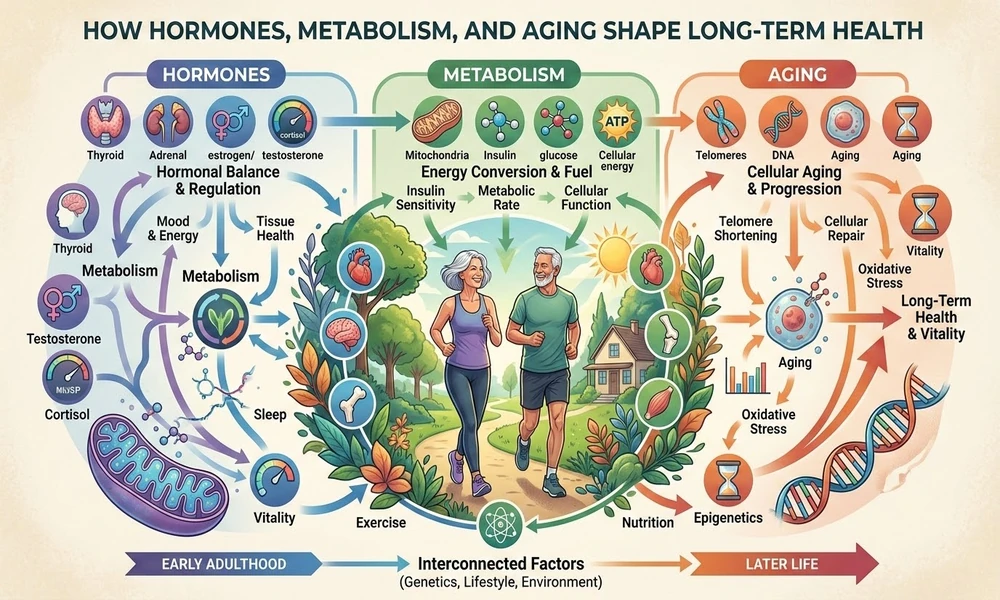
Long-term health depends on many connected systems in the body, but hormones and metabolism play an especially important role. Hormones act as chemical messengers. They help regulate appetite, sleep, mood, muscle mass, energy use, blood sugar, sexual health, and cardiovascular function.
Metabolism determines how the body converts food into energy, stores fuel, builds tissue, and responds to physical activity. As people age, both hormone patterns and metabolic function naturally change. Some changes are gradual and expected. Others may point to an underlying health issue that deserves attention.
A slower metabolism, reduced muscle mass, shifting body fat, lower energy, changes in blood pressure, and altered cholesterol levels can all be influenced by hormonal changes. Understanding these connections can help people make more informed decisions about prevention, screening, lifestyle habits, and medical care.
The Relationship Between Hormones and Metabolism
Hormones help determine how efficiently the body uses energy. Insulin, thyroid hormones, cortisol, estrogen, progesterone, testosterone, growth hormone, and appetite-related hormones all affect metabolism in different ways. When these hormones are well regulated, the body is better able to manage blood sugar, burn calories, maintain muscle, and respond to hunger and fullness cues.
When hormone levels shift, metabolism may become less efficient. Low thyroid hormone, for example, may contribute to fatigue, cold sensitivity, constipation, and weight gain. High cortisol, often linked with chronic stress or poor sleep, can affect appetite, blood sugar, and abdominal fat storage. Insulin resistance can make it harder for cells to use glucose properly, increasing the risk of weight gain and type 2 diabetes.
In men, testosterone also supports metabolism, muscle maintenance, and energy. Low testosterone may be associated with reduced lean muscle, increased body fat, low motivation, and changes in sexual health. Clinics such as EveresT Men’s Health provide male hormone replacement therapy and low testosterone treatment, which may be considered when symptoms and lab results support a clinical diagnosis.
Why Metabolism Often Changes With Age
Metabolism often slows with age, but age alone is not the only reason. One major factor is the gradual loss of skeletal muscle, known as sarcopenia. Muscle tissue burns more energy than fat tissue, even at rest. As muscle declines, the body may require fewer calories, which can make weight maintenance more difficult if eating and activity habits stay the same.
Physical activity also tends to decrease over time. Busy schedules, joint pain, injury, caregiving responsibilities, and sedentary work can all reduce daily movement. Less movement means fewer calories burned and less stimulus for muscle preservation. Over time, this can create a cycle where lower activity leads to muscle loss, which then further slows metabolic rate.
Hormonal shifts can add another layer. In women, menopause is associated with lower estrogen levels, which may influence fat distribution, insulin sensitivity, and cardiovascular risk. In men, testosterone may decline gradually with age. These changes do not affect everyone the same way, but they can influence energy levels, weight patterns, and long-term health risks.
Weight Regulation Is More Than Calories Alone
Body weight is affected by food intake and physical activity, but biology also plays a major role. Hunger, fullness, cravings, fat storage, and energy expenditure are influenced by hormones such as leptin, ghrelin, insulin, cortisol, and thyroid hormones. That is one reason two people can follow similar diets and see different results.
Chronic stress and poor sleep can make weight regulation harder. Elevated cortisol may increase appetite and cravings for calorie-dense foods. Poor sleep can disrupt hunger hormones and reduce insulin sensitivity. Over time, these effects can contribute to gradual weight gain, especially around the abdomen.
For people with obesity or weight-related medical conditions, a medical evaluation may be helpful. A prescription weight loss doctor can assess metabolic health, medications, eating patterns, activity levels, and possible hormonal contributors. Services such as PhySlim focus on prescription-based weight loss care, which may be considered when lifestyle changes alone are not enough or when medical supervision is needed.
Blood Sugar, Insulin, and Energy Stability
Insulin is one of the most important hormones involved in metabolism. It helps move glucose from the bloodstream into cells, where it can be used for energy. When cells become less responsive to insulin, the body may produce more insulin to keep blood sugar in range. This is known as insulin resistance, and it can develop quietly for years.
Insulin resistance is closely linked with weight gain, fatigue after meals, increased hunger, high triglycerides, fatty liver disease, and a higher risk of type 2 diabetes. It can also affect cardiovascular health. Because early blood sugar changes are not always obvious, routine lab testing is important, especially for adults with a family history of diabetes, abdominal weight gain, high blood pressure, or abnormal cholesterol.
Energy often becomes steadier when blood sugar is better regulated. Balanced meals that include protein, fiber-rich carbohydrates, and healthy fats can help reduce sharp spikes and crashes. Regular movement, especially strength training and walking after meals, can also support insulin sensitivity. In some cases, medication may be needed as part of a broader treatment plan.
Cardiovascular Health and Hormonal Change
Heart and blood vessel health are closely connected to metabolism and hormones. Blood pressure, cholesterol, inflammation, blood sugar, body weight, and sleep all affect cardiovascular risk. Hormonal changes can influence these factors directly and indirectly, which makes midlife an important time to focus on preventive care.
For example, declining estrogen after menopause is associated with changes in cholesterol levels, blood vessel function, and fat distribution. In men, low testosterone has been studied in relation to body composition, insulin resistance, and cardiovascular markers, although treatment decisions require careful evaluation. Thyroid disease can also affect heart rate, cholesterol, and blood pressure.
Long-term management often works best when care is coordinated. Chronic conditions such as hypertension, diabetes, high cholesterol, and metabolic syndrome usually require ongoing monitoring rather than one-time treatment. Providers offering chronic disease management services, such as Forever Young Health Clinic, may support patients through primary care-style monitoring, prevention planning, and regenerative wellness approaches when appropriate.
Muscle Mass, Strength, and Healthy Aging
Muscle is central to long-term health. It supports mobility, balance, posture, blood sugar control, and metabolic rate. As people age, maintaining muscle becomes one of the most important ways to protect independence and reduce the risk of falls, frailty, and metabolic decline.
Strength training is especially valuable because it signals the body to preserve or build lean tissue. This does not always require heavy lifting. Resistance bands, bodyweight exercises, machines, free weights, and supervised physical therapy can all help, depending on a person’s ability and health status. In the beginning, consistency matters more than intensity.
Protein intake also becomes more important with age. Older adults may need to be more intentional about getting enough high-quality protein throughout the day. When combined with resistance training, adequate protein can help preserve muscle and support recovery. Hormonal health, sleep quality, and inflammation levels can also influence how well the body responds to exercise and nutrition.
Testosterone, Energy, and Long-Term Wellness
Testosterone is often discussed in relation to sexual health, but its role is broader. In men, testosterone contributes to muscle mass, bone density, red blood cell production, mood, motivation, and energy. Low testosterone may cause symptoms such as reduced libido, fatigue, depressed mood, decreased strength, and increased body fat.
Symptoms alone are not enough to diagnose low testosterone. Many conditions can cause similar issues, including sleep apnea, depression, thyroid disorders, chronic stress, medication side effects, excessive alcohol intake, and poor sleep. A proper evaluation usually includes a medical history, physical assessment, and blood testing, often repeated to confirm low levels.
Testosterone therapy is not appropriate for everyone and should be monitored carefully. Potential benefits and risks depend on age, health history, fertility goals, prostate health, cardiovascular risk, and baseline hormone levels. Clinics such as Lions OpTimal Health discuss safe testosterone replacement options, highlighting the importance of individualized evaluation, appropriate dosing, and follow-up care rather than a one-size-fits-all approach.
Lifestyle Foundations That Support Hormonal and Metabolic Health
Lifestyle habits cannot control every hormone-related issue, but they strongly influence metabolic health. Sleep is one of the most important foundations. Poor sleep can affect cortisol, insulin sensitivity, hunger hormones, mood, and recovery. Adults who consistently sleep too little may find it harder to manage weight, energy, and cravings.
Nutrition also plays a major role. Diets built around minimally processed foods, lean proteins, vegetables, fruits, legumes, whole grains, and healthy fats can support blood sugar, cholesterol, and satiety. Extreme diets may produce short-term results, but they can be difficult to maintain and may not support long-term metabolic health.
Movement is equally important. Aerobic exercise supports cardiovascular health, while resistance training helps preserve muscle and improve insulin sensitivity. Even modest increases in daily movement can make a difference. Walking, stretching, climbing stairs, gardening, and short exercise sessions can help interrupt long periods of sitting and support better metabolic function.
When Medical Evaluation Becomes Important
Because hormonal and metabolic symptoms can overlap, testing and medical evaluation can be useful. Fatigue, unexplained weight gain, sudden weight loss, low libido, irregular periods, hot flashes, poor sleep, mood changes, increased thirst, frequent urination, or persistent weakness may point to different underlying causes. Guessing based on symptoms alone can lead to missed diagnoses.
Common evaluations may include blood pressure checks, cholesterol testing, blood glucose or A1C testing, thyroid labs, liver and kidney function tests, and hormone panels when clinically appropriate. In some cases, clinicians may also screen for sleep apnea, anemia, vitamin deficiencies, or inflammatory conditions.
The goal of evaluation is not simply to find a number outside the normal range. It is to understand patterns. A person’s age, symptoms, medications, family history, lifestyle, and existing conditions all matter. Better decisions usually come from combining lab results with a full clinical picture.
Conclusion
Hormones, metabolism, and aging are deeply connected. Changes in one system can influence many others, affecting weight, energy, muscle, blood sugar, heart health, and overall resilience. While some age-related changes are normal, persistent symptoms should not be dismissed as inevitable.
Long-term health is best supported through prevention, regular screening, sustainable lifestyle habits, and appropriate medical care when needed. By understanding how hormones and metabolism interact over time, people can take a more informed, proactive approach to aging well.
